The Superpowers of OOH
If you’re on this page, chances are you used the QR code from one of our adverts and want to know more about Out-of-Home advertising. Scroll down and find out more about the advert that caught your attention. Thanks for checking in.
“Brands on Outdoor ads have 57% more Talkability”
Source: WPP The Out-of-Home Multiplier Effect 2018
This study examined the relationship between advertising spend, sourced from Nielsen Ad Dynamix and the YouGov Brand Index to analyse the relationship between media spend and brand metrics. It shows that Brands that spend on Out-of- Home have stronger scores for Talkability.

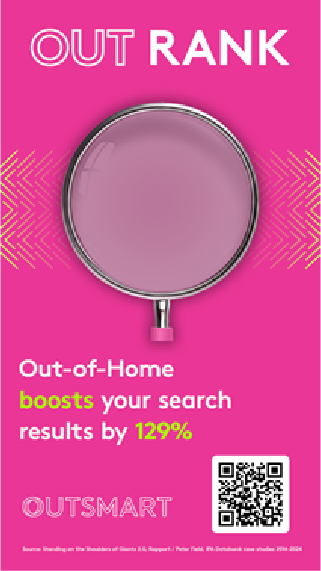
“Out-of-Home boosts your search results by 129%
Source: Standing on the Shoulders of Giants 2.0, Rapport / Peter Field, IPA Databank case studies 2014-2024
Field’s analysis of companies that invested in Out-Of-Home versus cases where companies did not invest in Out-of-Home, highlighted how search actions benefit from the brand fame afforded by Out-of-Home. When looking at ‘very large’ business effects, Out-of-Home power users boost the effect of search by 129%.
Peter Field is an Independent Marketing and Advertising Professional, author and public speaker. He has produced numerous reports and studies on Marketing Effectiveness, delving into the wealth of data in the IPA’s Effectiveness Awards Databank.
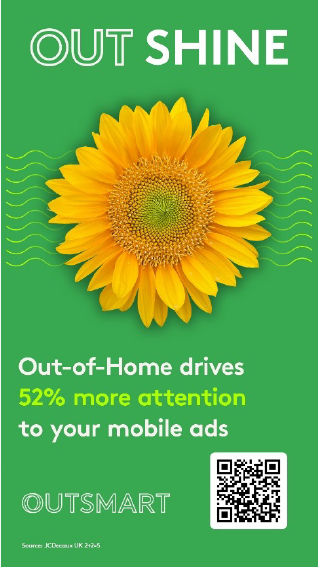
“Drive 52% more attention to your mobile ads”
Source: JC Decaux 2+2=5
Research by Mike Follett, managing director at Lumen Research, used eye-tracking to show a 52% increase in ad engagement among consumers on social media if they had already seen an Out-of-Home ad with similar content first. Click below for a full description of the methodology.
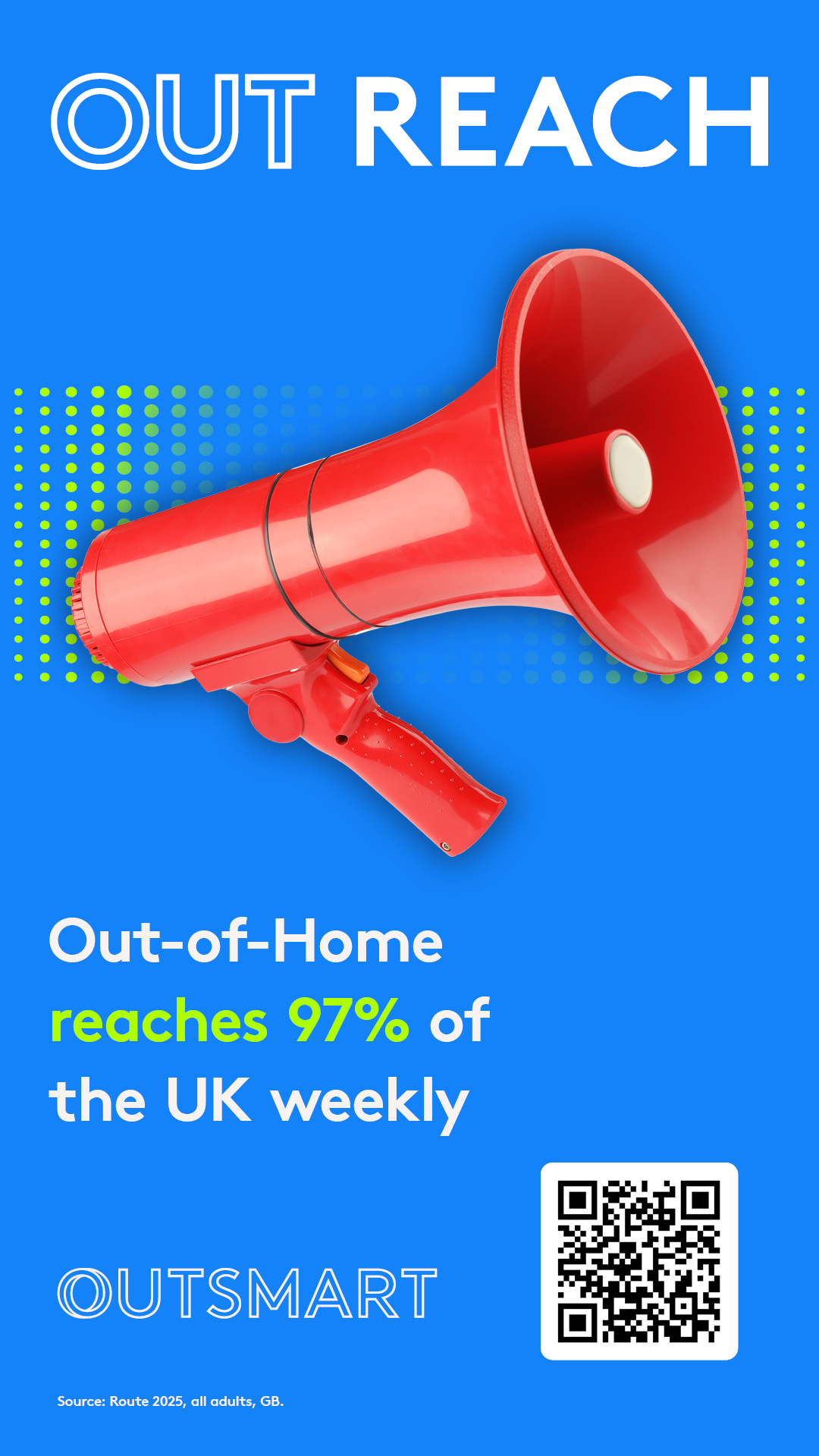
“The channel that reaches 97% of the UK weekly”
Source: Route 2025, all adults, GB..
Route is the Joint Industry Currency providing gold standard audience data (aged 15+) for the Out-of-Home industry in Great Britain. It combines passive location tracking, volumetric counts of various types including road users, visitors to malls, airports, rail passengers, underground station users, visitors to motorway service areas and eye tracking research to understand how likely people are to notice Out-of-Home ads when they pass by them.
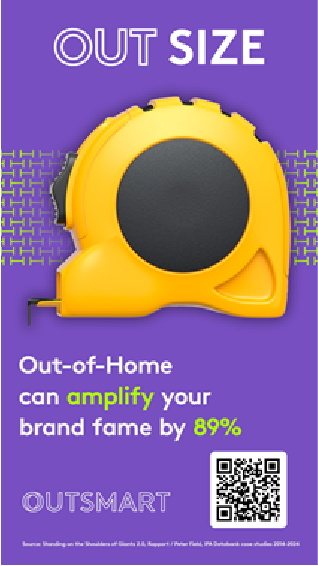
“Out-of-Home can amplify your brand fame by 89%”
Source: Standing on the Shoulders of Giants 2.0, Rapport / Peter Field, IPA Databank case studies 2014-2024
Field’s analysis of companies that invested in Out-Of-Home versus cases where companies did not invest in Out-of-Home, highlighted how search actions benefit from the brand fame afforded by Out-of-Home. When looking at ‘very large’ business effects, Out-of-Home power users boost the effect of search by 129%.
Peter Field is an Independent Marketing and Advertising Professional, author and public. He has produced numerous reports and studies on Marketing Effectiveness, delving into the wealth of data in the IPA’s Effectiveness Awards Databank.